A coffee company named for the thing it runs on: faith. Faith in the quality of our coffee, in the knowledge passed down through generations of farmers, and in the final product that reaches your roastery.
Uganda grows some of the most overlooked coffee in the world. Robusta grows wild in its forests. On the volcanic slopes of Mount Elgon and in the Rwenzori, the "Mountains of the Moon", smallholder farmers grow arabica at altitudes most coffee regions can only envy.
Most of it leaves the country as anonymous commodity coffee, mixed with everyone else's and sold at whatever the market pays. We started Imani Beans to change that for the farmers we work with: to keep every lot separate, name where it came from, and pay for the quality in the cup.
We sell it green because that's how coffee travels best, and because it puts the final step, the roast, in your hands.
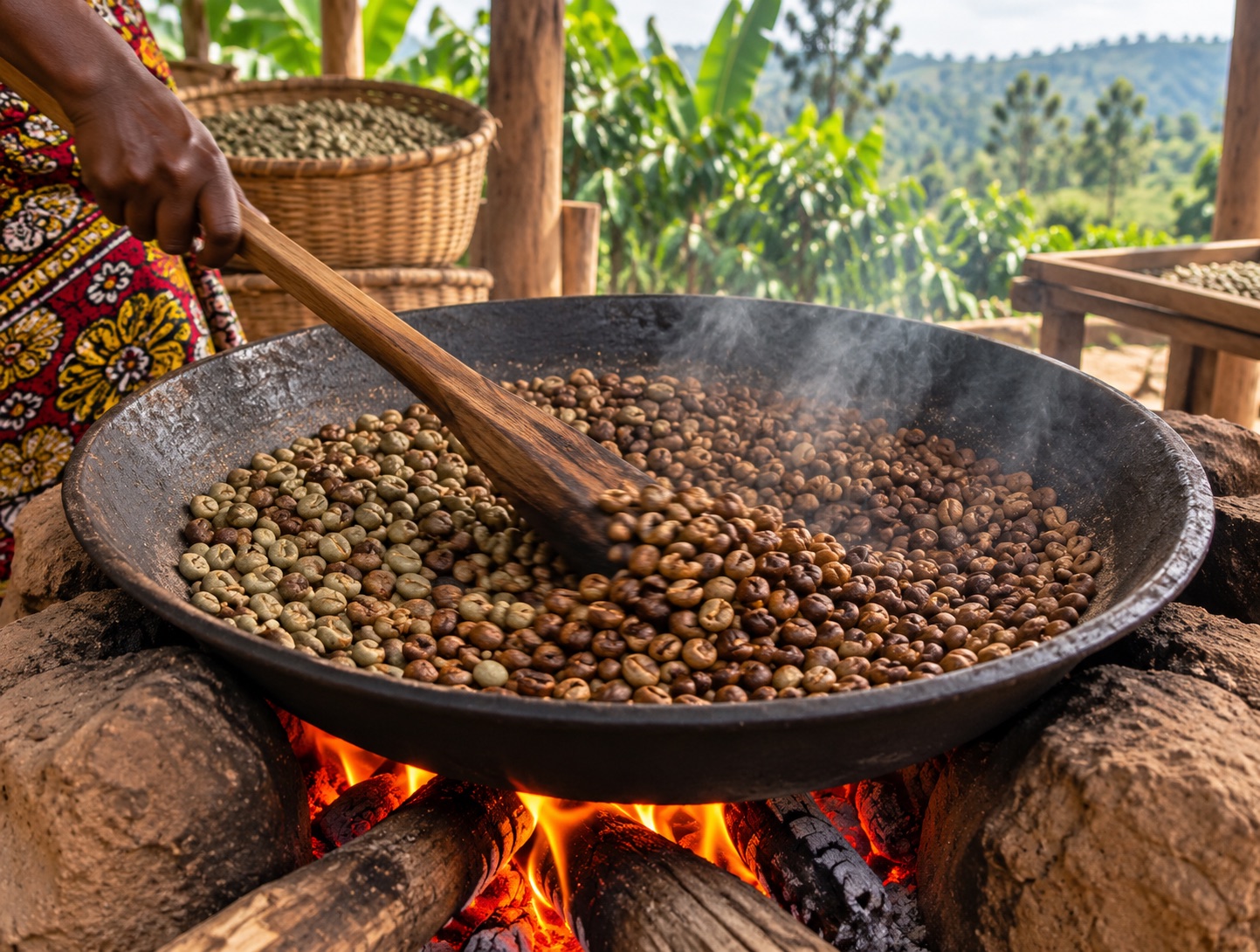
In Uganda, coffee is more than a crop. It is part of family life and tradition, roasted by hand over an open fire, shared with neighbours and offered to guests as a sign of welcome.
That heritage is carried from one generation to the next, and today it reaches coffee lovers all over the world. Every lot we export carries a piece of that culture with it.
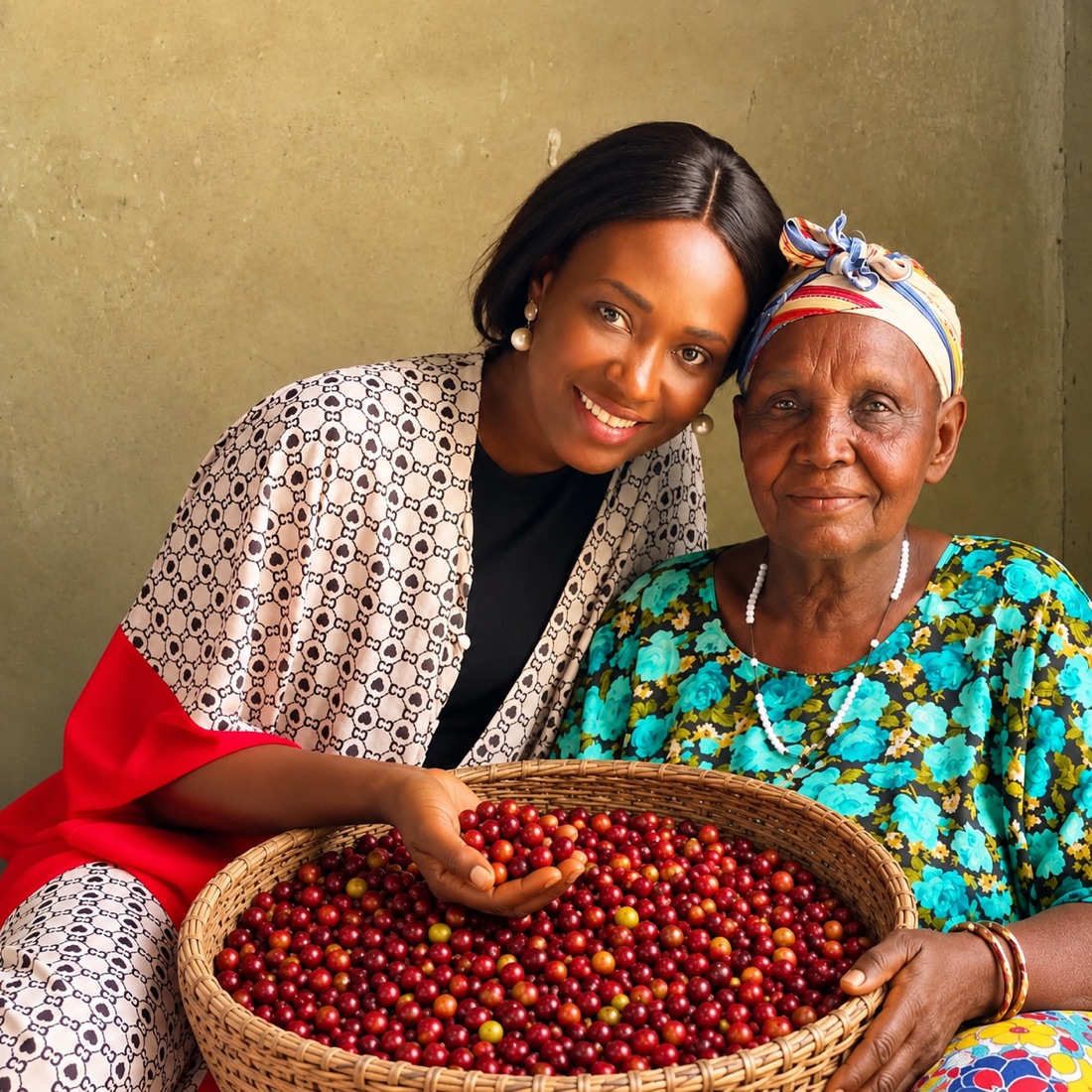
Keron Jenny Noyman grew up on her family's coffee farm in the foothills of the Rwenzori mountains, the same slopes that give us Rwenzori arabica, natural Drugar and Robusta.
The Rwenzori, the "Mountains of the Moon", rise on Uganda's border with Congo. Rich soils from the volcanic crater fields around Fort Portal, snow-fed mountain rivers and steady rain give its coffee a full body and a deep, fruity sweetness.
She was picking coffee before she was tall enough to reach the top branches. Season after season she learned the craft from her grandmother, who had learned it from the generation before her: when a cherry is truly ripe, how the trees should be shaded and pruned, and how careful drying and sorting decide what ends up in the cup.
That is the knowledge she brings to Imani Beans. Keron knows coffee quality from the tree up, and she knows the families who grow it, because she is one of them.
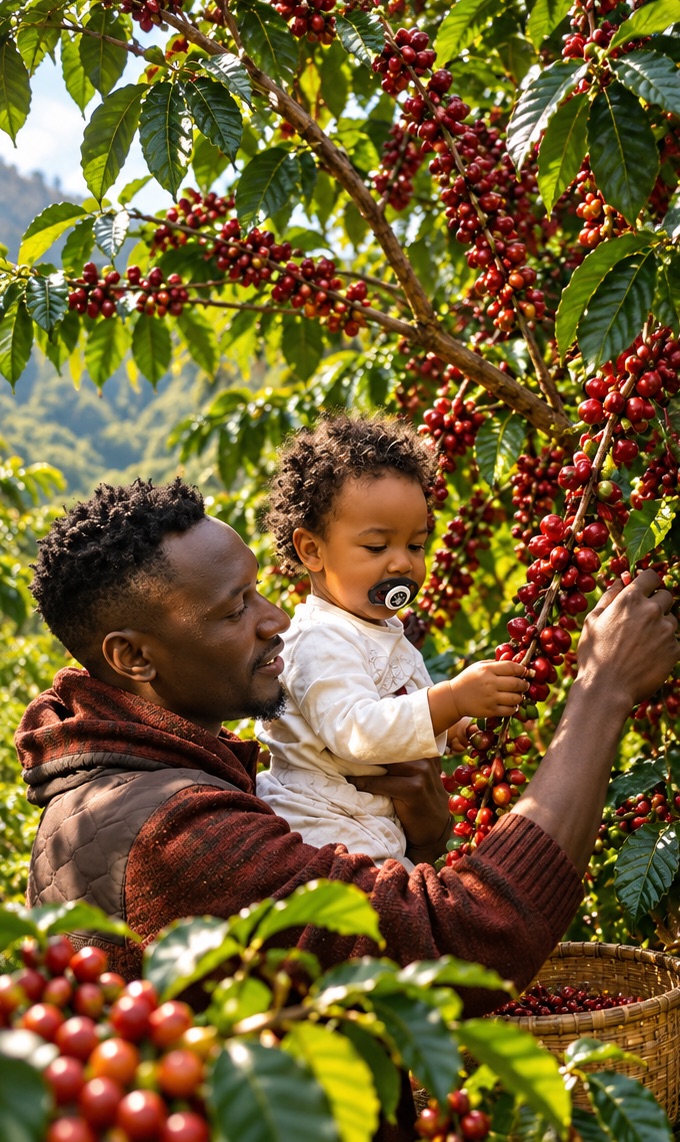
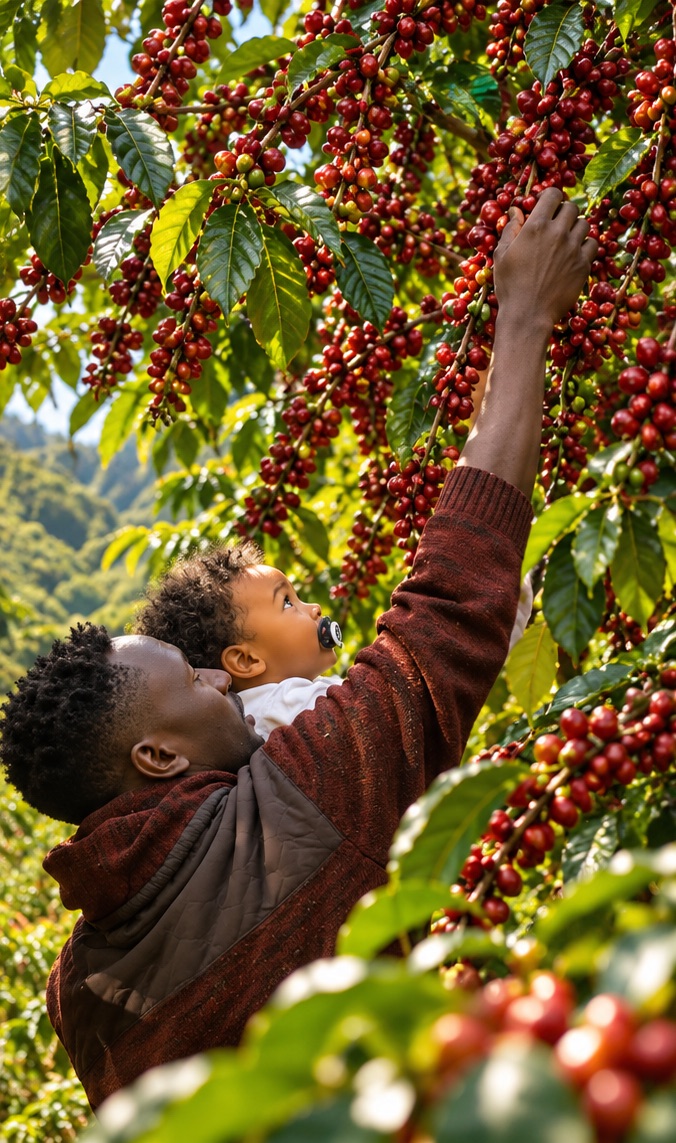
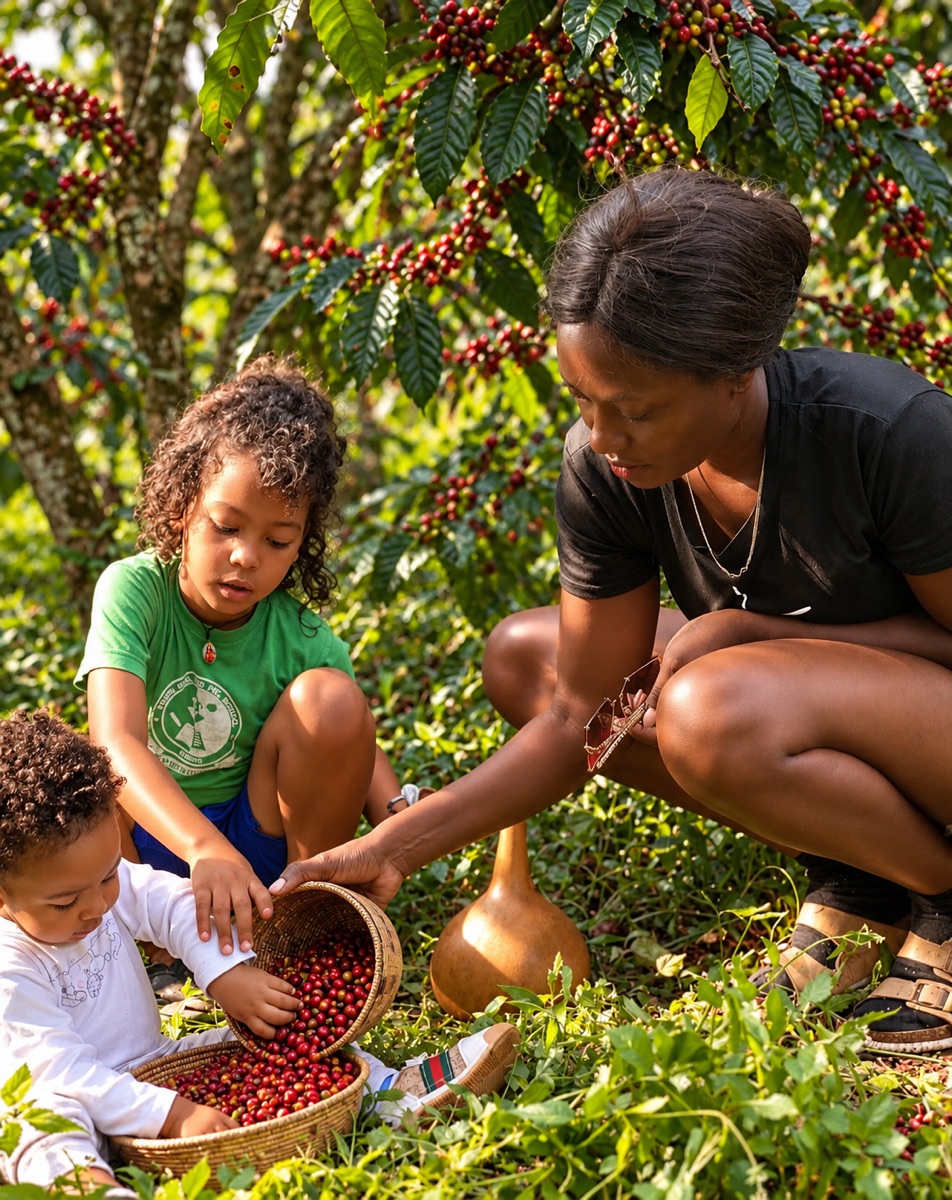
We buy from the same farmer groups every harvest, visit at picking time, and pay a quality premium above the market price.
Our arabica grows among banana and native trees that protect the soil, hold water and keep the hillsides alive.
No blending at origin. The lot you cup as a sample is the lot you receive in the sack.
In the coffee-growing communities we work with, many children go to school hungry, and many more don’t go at all, because there is no meal for them at school. A hungry child can’t learn, and often has to stay home or work instead.
Imani Beans helps provide school meals for local children, so they arrive with full bellies, stay in class all day and have the energy to learn. Every container you buy from us helps keep these children fed and in school.
Nutritious food for children in the communities where our coffee grows.
When there is food at school, children come to school, and they stay.
Part of every order goes to school meals. Want to help us provide even more meals? Contact us to become a sponsor.
Request a quote, and ask for free pre-shipment samples of the lots you choose.
Request a quote